

A quiet but meaningful shift is taking place in the world of luxury real estate. Affluent buyers are no longer limiting their search to the most familiar names on the map. Instead, they are turning their attention to emerging markets, where deeded fractional ownership offers something increasingly difficult to find in saturated destinations: genuine opportunity, unhurried beauty, and the kind of exclusivity that feels earned rather than inherited.
This is not simply a trend driven by budget consciousness. It is a deliberate recalibration, one that reflects a broader desire to own well, experience deeply, and belong to places that are still in the process of becoming something extraordinary.
What Deeded Fractional Ownership Actually Means
Before exploring where these opportunities are emerging, it is worth understanding what sets deeded fractional ownership apart from other shared property arrangements.
Unlike traditional timeshares, deeded fractional ownership gives buyers a legally recorded share of the property itself. This means the owner holds a tangible real estate asset, not simply a right to use a space during a designated window. Ownership is structured through detailed legal agreements that allocate specific usage periods, protect scheduling rights, and outline the responsibilities of all co-owners.
Many programs extend this further through global exchange networks, allowing owners to trade their allocated time at affiliated properties around the world. A co-owner in a Montenegrin villa might spend a season in a Greek island estate or a tropical retreat in Southeast Asia, broadening their lifestyle without the financial commitment of additional full purchases. The result is a hybrid lifestyle that blends the security of ownership with the freedom of exploration.
The Destinations Defining the Opportunity
The most compelling deeded fractional ownership opportunities today are found in destinations that combine natural distinction, cultural depth, and improving infrastructure. Three regions stand out.
Montenegro’s Adriatic Coast
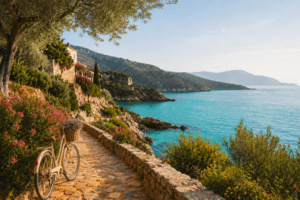
Montenegro has emerged as one of Europe’s most quietly captivating destinations. Azure waters, dramatic mountain backdrops, and a medieval coastal heritage create a setting that feels genuinely original. Contemporary villa developments along the Adriatic coast now feature private marinas, wellness centers, and architectural design that complements rather than competes with the landscape. Infrastructure investment has accelerated in recent years, with improved airports and connectivity drawing increased international attention while preserving the sense of discovery that makes the region so appealing.
Colombia’s Caribbean Islands
Colombia’s Caribbean island communities offer something rare in the luxury market: eco-conscious residences embedded within vibrant marine ecosystems. Coral reefs, clear waters, and a warm cultural energy define this coastline, and a new generation of developments is responding with properties that prioritize sustainability alongside comfort. Rising global interest in Colombia as a travel destination, combined with continued infrastructure development, has positioned these islands as one of Latin America’s most promising emerging markets for property appreciation.
Greece’s Lesser-Visited Cyclades
While Santorini and Mykonos remain perennial favorites, the broader Cyclades archipelago holds dozens of islands that offer comparable beauty with far fewer visitors. Secluded estates overlooking volcanic landscapes, whitewashed villages that have changed little in centuries, and the unhurried pace of island life make these properties deeply appealing to buyers seeking authenticity. For those already familiar with the Greek islands, ownership in one of these quieter destinations offers the pleasure of a place that feels genuinely personal.
The Financial Case for Emerging Markets
The lifestyle appeal of these destinations is clear, but the financial logic is equally compelling. Entry thresholds for deeded fractional shares in emerging markets tend to be considerably more accessible than outright ownership in comparable prime locations. Shares often begin at a fraction of full-market costs, yet the potential for returns through appreciation and rental income during unused periods can align closely with those of traditional real estate holdings.
Much of this appreciation potential is driven by regional economic expansion and rising international awareness. In destinations across Southeast Asia, Latin America, and select African coastal regions, growing tourism infrastructure and increased foreign investment have pushed property values upward, occasionally surpassing appreciation rates in mature luxury markets such as the Amalfi Coast or the French Riviera. For buyers who enter at the right moment in a destination’s development arc, the rewards can be significant.
Rental income during unused periods adds another dimension to the financial picture. Seasonal tourism surges and the growing appetite for curated luxury travel experiences have created strong demand for well-managed fractional properties, providing co-owners with returns that help offset carrying costs and, in many cases, generate meaningful income.
Approaching the Opportunity With Clear Eyes
The appeal of deeded fractional ownership in emerging markets is real, but so are the complexities involved. Prospective buyers would do well to approach the process with careful consideration rather than enthusiasm alone.
Geopolitical developments and shifting regulatory frameworks can introduce uncertainty, particularly in less-established markets. Legal structures governing co-ownership vary widely by jurisdiction, and the processes for dispute resolution or property transfer can differ considerably from those in more mature real estate environments. Currency volatility in certain developing economies has, in some instances, affected resale liquidity, making it harder to exit a position quickly or at an anticipated value.
Infrastructure timelines present another area of consideration. Developments marketed on the promise of improved airports or expanded connectivity are not always delivered on schedule, and delays can affect both the ownership experience and the surrounding property market.
None of these factors diminish the genuine opportunity that deeded fractional ownership in emerging markets represents. They simply underscore the importance of working with experienced legal counsel, conducting thorough due diligence on both the property and the jurisdiction, and selecting developments backed by credible management teams with a demonstrated track record.
A New Chapter in Luxury Ownership
The most rewarding investments, in property as in life, are rarely the most obvious ones. Deeded fractional ownership in emerging luxury markets offers affluent buyers something that the world’s most saturated destinations can no longer reliably provide: the experience of arriving somewhere that is still becoming itself, and the privilege of being part of that story.
For those who live by the hybrid lifestyle, moving fluidly between exploration and belonging, between financial prudence and experiential richness, these destinations are not a compromise. They are, increasingly, the most considered choice available.