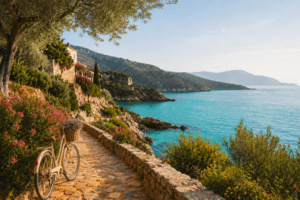


In this article, we look at something larger than any single traveler’s experience: the collective effect of many committed, caring returners on the destinations they have chosen. When enough people love a place genuinely and return to it with care, something begins to shift. The destination itself changes, often for the better, in ways that benefit everyone who lives there and everyone who comes after.
Most conversations about luxury travel focus on what the traveler gets out of it. The experience, the rest, the connections, the memories. These are real and important things, and this series has explored them at length.
But there is another conversation worth having, one that looks in the opposite direction. Not at what the destination gives to the traveler, but at what the traveler gives to the destination. And when you look at what happens to places that attract a significant number of committed, thoughtful, returning visitors, something quietly remarkable comes into focus.
Thoughtful travelers are changing the places they love. Not loudly, not through campaigns or protests, but through the simple accumulation of the choices they make year after year. Where they spend. What they pay attention to. What they protect by caring about it. The effect is real, and it matters.
The Difference One Returning Traveler Makes
Start small. Think about a single returning traveler, someone who has co-owned a property in a small coastal town for ten years and comes back three times a year.
Over that decade, they have eaten at the same handful of local restaurants dozens of times. They have bought from the same market vendors across many seasons. They have hired the same local guide, used the same cleaning service, recommended the same small hotel to visiting friends. They know the mayor’s name. They have noticed when the beach was eroded by a storm and mentioned it to the local council. They have taught their children the names of the birds that nest in the hillside above the property.
None of these things are dramatic. But they add up to something real. The restaurants they frequent have more stable revenue than they would without returning customers who come regardless of the season. The guide they hire has built a relationship with someone who sends referrals. The children they raised with those bird names are adults who now care about coastal ecosystems in ways their peers do not.
One returning traveler, across ten years, leaves a quieter but more lasting mark on a place than a thousand one-time visitors. Now imagine what happens when there are many of them.
What a Community of Returners Does to a Destination
When a destination attracts a community of committed returning visitors, something begins to shift in how the place functions and how it sees itself.
The local economy becomes less dependent on the peaks and troughs of seasonal tourism. Businesses that serve returning visitors can plan more reliably, invest more confidently, and offer more consistent quality than those whose income arrives and disappears with a single summer rush. This stability tends to produce better outcomes for local workers, whose employment becomes more year-round, and for local entrepreneurs, who can build something sustainable rather than scrambling to extract maximum revenue in a narrow window.
The character of the destination is also shaped by who returns to it. Places that attract thoughtful, engaged visitors tend to develop a culture of quality and care that feeds on itself. Local artisans find a market for work that genuinely reflects the region’s heritage because returning visitors have developed the taste to appreciate it. Restaurants that use local ingredients and reflect local culinary traditions find that their most loyal customers are the ones who come back year after year and care enough to notice the difference.
Over time, this creates a virtuous cycle. The destination becomes more genuinely itself, more rooted in its own character, more worth returning to. And the community of people who love it and return to it becomes the most reliable force for protecting and deepening that character.
The Role of Co-Ownership in This Shift
Co-ownership is not simply a way for individuals to access a place they love more efficiently. It is, in aggregate, a model for a different kind of relationship between travelers and destinations.
When a small group of owners share a property in a destination, several things follow almost automatically. The property is maintained to a consistent standard across the full year rather than neglected during the off-season. The owners, because they are invested in the destination’s long-term health, tend to engage with it more thoughtfully than transient visitors. And the professional management infrastructure that supports the property often becomes a source of reliable local employment and local supply chain relationships that benefit the wider community.
Multiply this across many co-owned properties in a single destination, and the effect becomes significant. A destination with a healthy co-ownership ecosystem tends to have more year-round economic activity, better-maintained properties, and a visitor community that is more engaged and more invested in the place’s future than one that depends primarily on seasonal tourism peaks.
This is not a theoretical benefit. It is the observable reality of destinations that have attracted a significant co-ownership community, where the combination of consistent investment, year-round engagement, and genuine care from a community of returning owners has produced outcomes that single-visit tourism simply cannot replicate.
Protecting What Makes a Place Worth Loving
The most important thing that a community of returning travelers does for a destination is protect the qualities that make it worth returning to in the first place.
This is not always obvious from the outside, because the protection is mostly passive. It happens through the choices that committed returners make without necessarily framing them as protective. Choosing the local restaurant over the international chain. Engaging with the cultural heritage of a place with genuine curiosity rather than consuming it as entertainment. Noticing when something is changing and caring enough to say so. These choices, made consistently across many people across many years, create a kind of invisible infrastructure of care around the things that give a destination its character.
The destinations most at risk of losing what makes them special are those that attract only passing visitors with no long-term stake in what happens there. The ones best positioned to maintain their integrity across decades of changing pressures are those with a community of people who love them genuinely and return to them reliably. That community is not always visible. But its effect is.
A Reason to Choose Carefully
All of this is a reason to choose the destinations you commit to with genuine care. Not just because the right destination will serve your life better than the wrong one, though it will. But because the destinations you choose are also choosing you, in a sense. They are becoming part of your story, and you are becoming part of theirs.
The places that benefit most from the hybrid lifestyle are those that attract people who are willing to truly show up for them. Not just once, not just when the weather is perfect and the mood is right, but consistently, across seasons and years and the varying circumstances of a full life. People who notice, who listen, who spend thoughtfully, and who care about what happens to the place when they are not there.
If you are building a hybrid lifestyle, you are not just building a better travel experience for yourself. You are quietly contributing to the health and character of the places you have chosen. That is a responsibility worth knowing about. It is also, when you think about it, one of the best reasons to choose a place that genuinely deserves your commitment.
The world has enough visitors. What the best places need, and what the hybrid lifestyle can provide, are people who truly belong.