
In this article, we explore the relationship between food and belonging. When you return to the same destination year after year, something changes about how you eat there. You stop ordering what the guidebook recommends and start eating the way the people who live there eat. That shift, small as it sounds, is one of the most genuine expressions of belonging that the hybrid lifestyle offers.
Food is how most of us first make contact with a new place. The flavors are different. The ingredients are unfamiliar. The way people eat, when they eat, and what they consider a proper meal reveals something about the culture that no museum or monument can quite convey. On a first visit to anywhere, food is one of the most vivid and immediate ways to encounter the place itself.
But food does something else entirely when you return to a place many times. It stops being a way to encounter the unfamiliar and starts being a way to come home. The taste of a particular bread, a particular olive oil, a particular style of cooking that exists only in this region and nowhere else in the world, becomes associated not with discovery but with arrival. With the knowledge that you are back somewhere you belong.
This transformation, from food as discovery to food as belonging, is one of the quieter and more personal pleasures of the hybrid lifestyle. And it deserves its own article.
The First Visit and the Guidebook Table
On a first visit to any destination, most travelers eat well by following recommendations. The restaurant that appears in every article about the place. The dish that everyone says you cannot leave without trying. The market that has been photographed a thousand times and is worth visiting for good reason.
There is nothing wrong with this. These recommendations often exist because they genuinely deserve to. The food is good, the experience is memorable, and you leave with a clear impression of the culinary character of the place.
But there is a ceiling to what this kind of eating can offer. The restaurant designed to be someone’s best meal in a destination is performing a version of the local food culture rather than simply living it. It knows what visitors expect and delivers it beautifully. What it cannot offer is the unselfconscious, ordinary, daily version of the same food culture, the version that is not designed for anyone in particular because it does not need to be.
The returning traveler, across several visits, eventually finds their way below the ceiling. And what they discover there is often more interesting than anything above it.
Finding Your Table
Every returning traveler eventually finds what they think of as their table. Not necessarily a specific seat in a specific restaurant, though sometimes it is exactly that. It is the place where they are known, where their arrival produces a particular kind of welcome that is warmer than the standard greeting, and where the food reflects the genuine daily cooking of the place rather than a performance of it.
This table is rarely found on a first visit. It is found gradually, through the process of eliminating the obvious options and following curiosity into less visited streets, less reviewed establishments, and the kind of places that have no reason to be remarkable except that the food is genuinely good and the welcome is genuinely warm.
The process of finding it is itself one of the pleasures of the hybrid lifestyle. Each visit narrows the search a little more. A recommendation from someone who lives there leads somewhere unexpected. A wrong turn produces a discovery. By the third or fourth visit, the landscape of the destination’s food culture is familiar enough that real exploration becomes possible, and the places found through that exploration are among the most treasured discoveries the hybrid life offers.
Cooking in a Place You Know
One of the distinctive pleasures of the co-owned residence is the kitchen. Not just any kitchen, but the specific, well-equipped kitchen of a property that you return to, that you have stocked before and know how to use, and that connects you to the food culture of the destination in a way that restaurant eating alone cannot.
Cooking in a co-owned residence at a destination you know well is a different experience from cooking at home or cooking in an unfamiliar rented property. You know where the good market is. You know which stall to buy the cheese from and which to avoid. You know the season and what it means for what is available and what is at its best right now. You cook with ingredients that reflect the genuine food culture of the place, not imported approximations, and the result tastes of somewhere specific rather than nowhere in particular.
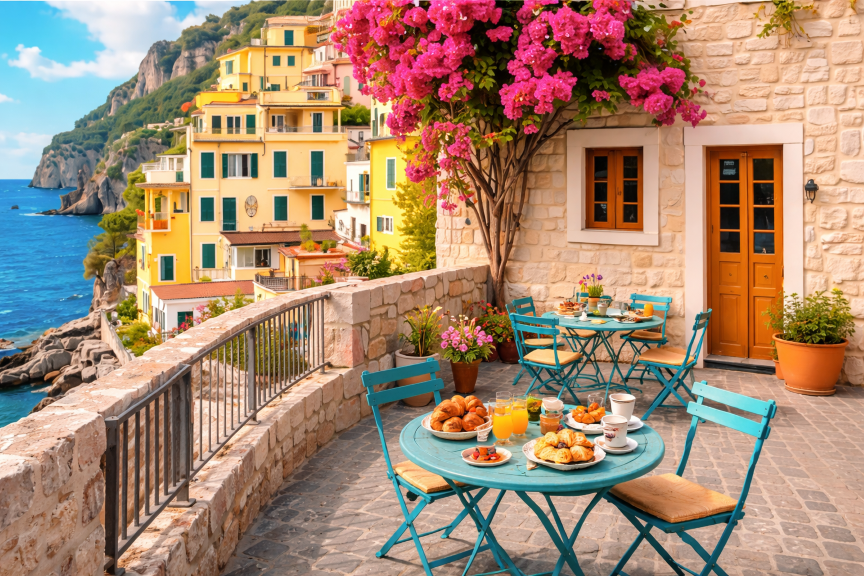
This cooking is not ambitious in the way that a restaurant meal is ambitious. It is simple food made with excellent local ingredients, eaten at a table with a view you know, in a kitchen that has become familiar enough to use without thinking. It is, in a very specific sense, eating like you live there. And it is one of the most deeply pleasurable expressions of belonging that the hybrid lifestyle makes available.
The Market as a Way of Knowing a Place
The market, in almost every destination that has one, is one of the most reliable windows into the genuine food culture of the place. Not the tourist market selling souvenirs and trinkets, but the ordinary weekly market where local people buy the food they will eat that week.
The returning traveler who visits the same market across several years develops a relationship with it that a first-time visitor cannot access. They recognize the vendors. They know which season produces which goods, and they look forward to the first appearance of particular ingredients the way they might look forward to a familiar face. They buy things they know how to use and things they want to learn how to use, and they carry the market back to the kitchen of the co-owned residence with a particular pleasure that is not quite shopping and not quite sightseeing but something in between.
The market is also one of the best places in any destination for genuine local conversation. When you buy from the same person several times across several years, you stop being a customer and start being a familiar face. The exchange that happens at a market stall between a returning visitor and a vendor who recognizes them is one of the small, real, human pleasures of a life built around returning to the same places.
When Food Becomes Memory
The deepest thing that food does in the context of the hybrid lifestyle is something that only becomes clear across years of return: it becomes the most reliable trigger for the particular feeling of being back.
Before you see the view or unpack your bag or feel the quality of the light, you eat something. A piece of the bread that exists only in this region. A glass of the local wine you have been looking forward to since the last visit. A dish from the restaurant where you are always welcomed back. And the taste of it, immediate and specific and entirely familiar, produces a kind of recognition that is more direct and more physical than any other.
You are back. The place remembers you, and you remember it, and the memory lives in the body rather than the mind. It is one of the oldest and most human forms of belonging there is.
Food, in the end, is not just nourishment. It is connection. It is memory. It is one of the most honest ways a place has of saying that it knows you, and one of the most honest ways you have of saying that you are glad to be back. The hybrid lifestyle, built around returning to the places that matter most, gives food the chance to become all of these things. And once it does, the table you return to becomes one of the places you belong most fully in the world.