
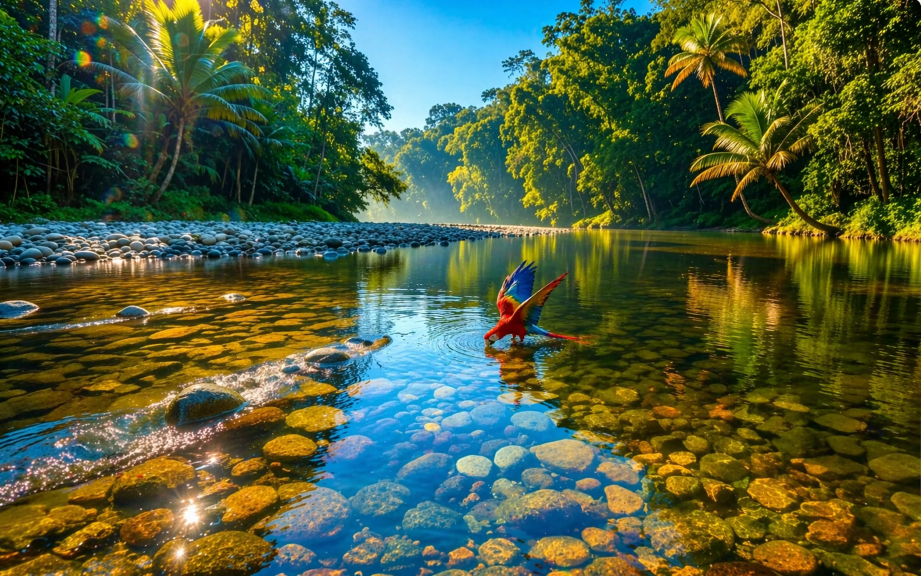
In this article, we explore the relationship between the hybrid lifestyle and the development of genuine aesthetic taste. Returning to a beautiful place across years does something to you that a single visit cannot: it teaches you to see. It refines your sense of what beauty actually is, separate from what is fashionable or expensive or impressive. And it brings that refined sense home with you.
There is a difference between being somewhere beautiful and actually seeing it.
On a first visit to anywhere extraordinary, most of us are busy. Busy orienting, busy photographing, busy ticking off the things we came to see. The beauty is registered, genuinely and with real pleasure, but it is registered in the way that a bright light is registered: as an impression rather than a detail. You know it was there. You know it was wonderful. But when you try to describe it specifically, the words are general. Stunning. Breathtaking. Incredible. Words that convey intensity without content.
The returning traveler, gradually and without particularly trying, learns to see. They have time, across visits, to stop registering and start looking. And what they find, when they look slowly at a place they already know is beautiful, is that the beauty is in the details. In the specific, particular, unrepeatable details that make this place different from every other beautiful place in the world.
This is one of the quieter gifts of the hybrid lifestyle. It teaches you to see. And once you have learned, you cannot quite unlearn it.
What Slow Looking Reveals
There is a practice in the art world called slow looking. It involves standing in front of a single work for much longer than feels comfortable, resisting the impulse to move on, and waiting for the painting or the sculpture or the photograph to reveal itself across time rather than surrendering its meaning in the first thirty seconds.
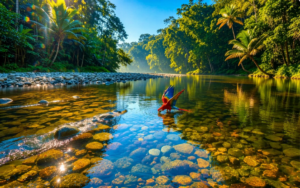
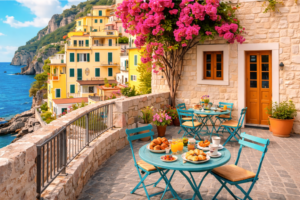
The experience of a beloved destination across years is a form of slow looking applied to an entire place. The landscape that seemed simply beautiful on a first visit begins, across multiple returns, to reveal the specific qualities that make it beautiful. The way the light hits the water at a particular time of afternoon. The proportion of the buildings in the old town to the streets between them. The color of the stone in morning sun versus evening. The way the vegetation changes at different altitudes, and what that change does to the quality of the air.
None of these things are available to the first-time visitor who is busy and excited and taking photographs. They are available only to the person who has been here before, who knows what they are looking at in the general sense, and who has enough ease and familiarity to give their attention to the particular.
This process of slow looking across years is not something you have to consciously practice. It happens naturally when you are somewhere familiar and relaxed and unhurried. The eye, freed from the work of orientation, begins to do what it does best: find what is genuinely interesting rather than what is obviously spectacular.
What a Place Teaches You About Your Own Taste
One of the most surprising things that returning to the same beautiful place across years produces is a clearer understanding of your own aesthetic preferences.
This happens because familiarity removes the noise. On a first visit, everything is competing for your attention. The grand views, the famous buildings, the recommended experiences. It is very difficult, in that context, to know what you personally find beautiful as opposed to what you have been told is beautiful.
On a fifth or sixth visit, the noise has quieted. You have already given your attention to the obvious things and formed your considered opinion of them. What emerges in that quieter space is a much clearer sense of what you actually respond to. The small carved detail above a doorway that you stop at every time. The particular stretch of coastline that you find more beautiful than the famous viewpoint. The quality of the evening light at a specific hour in a specific season that you have started planning your walks around.
These are not arbitrary preferences. They are the beginning of genuine taste, which is simply the ability to know what you love and why you love it, separate from what you have been told to love. A beloved destination, experienced slowly across years, is one of the most reliable teachers of this capacity.
Bringing It Home
The aesthetic education that a returning traveler receives in a beloved destination does not stay there when they leave. It comes home with them, and it changes how they see the world they live in ordinarily.
This is one of the most unexpected gifts of the hybrid lifestyle, and one that is almost never discussed. People who spend significant time in places of genuine beauty, and who have learned to see that beauty slowly and specifically, develop an eye that they carry with them everywhere. They notice things at home that they would not have noticed before. The quality of the light in their own city at a particular time of year. The proportion of a building they have walked past a hundred times without really seeing. The color of an ordinary thing that turns out, when you look at it with the attention a beautiful destination has taught you, to be genuinely extraordinary.
This is not about developing expensive taste or an eye for luxury in the commercial sense. It is about developing the capacity to find beauty in the specific and the particular rather than only in the grand and the obviously impressive. That capacity, once developed, makes ordinary life richer in a way that costs nothing and requires no special circumstances.
It is, in the truest sense, one of the things that a well-traveled life gives back.
The Objects That Come Home
Most returning travelers develop, across years of visiting a beloved destination, a small and personal collection of objects that have come home with them from that place.
Not souvenirs in the conventional sense. Not the things designed to be purchased and taken away, which tend to be generic representations of a place rather than genuine expressions of it. But the things found more quietly: a piece of local pottery bought from the maker rather than the gift shop. A print by an artist encountered through a local gallery rather than a tourist market. A textile that reflects the specific weaving tradition of the region in a way that mass-produced versions do not.
These objects carry something back that photographs do not. They are physical, and they occupy space in the world. They bring the specific aesthetic of a beloved destination into everyday life at home, and they are daily reminders not just of the place but of the quality of attention that the place taught you to bring to the world.
Over years, these objects accumulate into something that is not quite a collection and not quite a decoration but something more personal than either. A slow material record of the aesthetic education that a beloved destination has provided across a lifetime of return.
Beauty as a Practice
The deepest thing that a beloved destination teaches, when you have returned to it often enough and looked at it slowly enough, is that beauty is not something that exists in exceptional places and nowhere else. It is something that exists everywhere, in different forms and at different scales, and that is available to anyone who has developed the patience and the attention to find it.
The hybrid lifestyle, by giving you a place to practice this attention repeatedly and across years, trains a capacity that extends far beyond the destination itself. The traveler who has learned to see beauty slowly in a beloved place brings that learning home, and finds that home, and the world beyond it, looks different as a result.
This is not a grand claim. It is a quiet one. The kind that only becomes clear across time, in the accumulated experience of someone who has been paying attention for long enough to notice what the attention has produced.
Beauty, it turns out, is less about where you are and more about how you look. The hybrid lifestyle teaches you how to look. And that is a gift that lasts considerably longer than any single extraordinary view.