
There is a certain kind of traveler who no longer feels entirely satisfied by either option on the table. A holiday feels too brief. A permanent move feels too final. What they are searching for exists somewhere in between: a place that is genuinely theirs, in a destination that still has the power to surprise them.
This is the essence of the hybrid lifestyle, and it is quietly reshaping the world of luxury travel and property ownership in ways that are becoming impossible to ignore.
Belonging Without Boundaries
Co-ownership of luxury properties has matured well beyond its early reputation as a timeshare reinvention. Today’s fractional ownership model offers affluent buyers something more considered: deeded equity in a beautifully managed residence, the freedom to arrive and settle in rather than unpack and rush, and a genuine connection to a place that deepens with every visit.
The shift is philosophical as much as financial. Buyers drawn to the hybrid lifestyle are not looking for the most prestigious address or the most recognizable destination. They are looking for places that reward patience and return visits, places where familiarity becomes an asset rather than a limitation. The destinations attracting this new wave of co-ownership interest are not the ones filling airport billboards. They are the ones that reward curiosity.
Portugal’s Alentejo: Rooted in the Unhurried
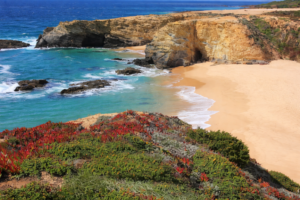
An hour from Lisbon, the Alentejo opens into one of Europe’s most quietly captivating landscapes. Cork forests, ancient vineyards, and a coastline so protected by natural park status that it feels borrowed from another era unfold across a region that has largely resisted the pressures of mass tourism.
Fractional residences here are built with the landscape in mind: sustainably designed, locally sourced, and quietly refined. Owners return to familiar olive groves, trusted winemakers, and a pace of life that gradually becomes part of their own rhythm. The culinary culture alone, shaped by centuries of agricultural tradition and some of Portugal’s finest wines, offers a depth of experience that deepens rather than diminishes with each visit.
This is not just a retreat. For those who embrace the hybrid lifestyle, it is a second home in the fullest sense, a place where belonging is earned gradually and held gently.
Costa Rica’s Nicoya Peninsula: Wellness as a Way of Living
The Nicoya Peninsula carries a distinction that sets it apart from every other wellness destination in the world. As one of five globally recognized Blue Zones, it is a place where people measurably live longer, shaped by clean air, Pacific light, and a culture that has built longevity into its daily rhythms rather than treating it as an aspiration.
Co-ownership properties here blend naturally into the landscape, positioned between dense rainforest and the Pacific Ocean in a way that feels organic rather than imposed. Owners arrive to morning yoga, farm visits, and evenings that slow down in the most welcome way. The peninsula’s infrastructure has improved considerably in recent years, making it far more accessible without diminishing the sense of genuine escape that defines its appeal.
For hybrid lifestyle buyers drawn to wellness not as a program but as a philosophy, the Nicoya Peninsula offers something rare: a base from which to explore and, with each return, a place that feels increasingly like home.
Slovenia’s Lake Bled: Depth Over Discovery
Slovenia occupies a particular place in the European imagination, known to those who have found it and quietly kept as a personal discovery by many who have. The Lake Bled area offers the rare combination of alpine grandeur, European sophistication, and a welcome that has not yet been worn thin by the crowds that have transformed its more famous neighbors in Switzerland and Austria.
Co-ownership developments in the region feature modern chalets with spa facilities, guided hiking and cycling through the Julian Alps, and a sense of arrival that never becomes routine. The lake itself, framed by a medieval castle and surrounded by forested slopes, provides a backdrop that shifts with every season, offering owners a continuously evolving experience within a place they know well.
For those who have come to value depth of connection over breadth of discovery, Lake Bled represents exactly the kind of destination the hybrid lifestyle was built around.
Morocco’s Essaouira Coast: A Life With More Color
Few places carry the kind of creative energy that Essaouira generates so effortlessly. This fortified Atlantic coastal city, swept by ocean winds and painted in blue and white, has long drawn artists, musicians, and free thinkers who find in its medina streets and seafront ramparts something that more polished destinations simply cannot replicate.
The surrounding Atlantic coast now hosts a growing number of luxury co-ownership developments, many housed in beautifully restored riads that blend traditional Moroccan craftsmanship with contemporary comfort. Owners gain access to medina life, fresh seafood markets, world-class surf, and a community whose creative spirit gives the region a distinctly alive and unhurried energy.
For hybrid lifestyle buyers who want cultural immersion alongside physical beauty, Essaouira offers exactly the right balance: a place deeply rooted in its own identity, yet endlessly generous to those who arrive with genuine curiosity.
A New Definition of Home
What unites these destinations is not simply their beauty or their distance from the overcrowded luxury circuit. It is the quality of relationship they invite, one built on genuine familiarity rather than fleeting impression, on belonging rather than visiting.
The hybrid lifestyle is not about owning more. It is not about accumulating access to an ever-expanding list of prestigious addresses. It is about belonging more fully to a smaller number of places that continue to give back long after the first visit, places that grow richer the longer you know them.
For those who have always felt the pull between exploration and belonging, between the freedom of movement and the comfort of roots, co-ownership in destinations like these is no longer a compromise. It is, increasingly, the most considered choice available.