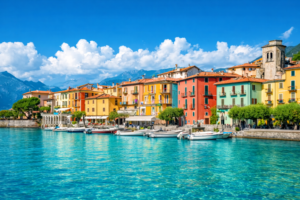


Retirement has a way of clarifying what matters. The ambitions that once justified complexity begin to soften, replaced by a quieter but equally compelling set of priorities: more time for the people and experiences that genuinely enrich life, and considerably less time managing the infrastructure that surrounds it. For many retirees who have spent decades building toward a life of refined enjoyment, the irony of full vacation property ownership eventually becomes difficult to ignore. The home that was meant to be a sanctuary has become another responsibility.
Co-ownership has emerged as one of the most thoughtfully designed answers to this particular tension. It preserves everything that makes a luxury residence appealing, the quality, the familiarity, the sense of having somewhere exceptional to return to, while removing the operational weight that so often diminishes the experience of sole ownership. For those entering or settling into retirement, it represents a genuinely different relationship with property: intentional, sustainable, and designed around how life is actually lived at this stage.
The Structure That Makes It Work
Understanding why co-ownership resonates so strongly with retirees begins with understanding how the model is built. Fractional shares, typically ranging from one-eighth to one-quarter of a property, give buyers a deeded equity stake in a professionally managed residence. Dedicated management teams handle every operational dimension: reservations, housekeeping, maintenance, repairs, and concierge coordination. Owners arrive to a property that is prepared, pristine, and ready, without having arranged any of it themselves.
Usage is structured through allocated weeks or points-based systems that provide genuine predictability. In sought-after destinations such as Tuscany, the Caribbean, or Lake Tahoe, this means knowing well in advance exactly when your time begins, what standard the property will meet, and what support is available throughout your stay. For retirees whose enjoyment depends on consistency rather than improvisation, this predictability is not a minor convenience. It is central to why the model works.
The absence of ongoing management responsibility is equally significant. There are no contractors to coordinate, no seasonal preparation to oversee, no decisions to make about when to repaint or which appliance to replace. Professional teams handle all of it, proportionally funded by the ownership group. What remains for the owner is the experience itself.
The Financial Case for This Stage of Life
The financial logic of co-ownership becomes particularly compelling when examined against the true cost of traditional second-home ownership in retirement.
A wholly owned vacation property carries a full suite of ongoing expenses regardless of how often it is used. Property taxes, insurance premiums, utility costs, maintenance, and the unpredictable expense of unexpected repairs accumulate across every month of the year, including the months when the property sits empty. For retirees managing fixed incomes or drawing down investment portfolios, the carrying cost of a property used for only a fraction of the year can be genuinely difficult to justify.
Co-ownership distributes these costs proportionally among owners, reducing the annual financial burden to a figure that reflects actual usage rather than full possession. The result is access to a residence of exceptional quality at a fraction of the cost of sole ownership, with none of the financial exposure that comes with maintaining an asset through market fluctuations and seasonal vacancy.
Resale options add another dimension worth considering. Well-managed fractional shares in desirable destinations have demonstrated meaningful liquidity, often providing a cleaner exit path than a wholly owned property in a slower market. For retirees who want the option to adjust their arrangements as circumstances evolve, this flexibility carries real value.
A Lifestyle Designed Around Seasonal Rhythm
Beyond the financial and operational benefits, co-ownership aligns naturally with something retirees often describe as one of the greatest pleasures of this phase of life: the freedom to move with the seasons.
Without the constraints of a fixed work schedule, retirement opens the possibility of genuine seasonal migration. Winters in warm climates, summers in cooler mountain or coastal escapes, spring and autumn in destinations chosen for their particular beauty at those times of year. Co-ownership supports this rhythm elegantly, particularly when paired with exchange networks that allow owners to access affiliated properties in different destinations during their unallocated periods.
The variety this enables is one of the model’s most appealing qualities for retirees who want continued discovery alongside the comfort of familiar places. Rather than returning to the same property every visit out of obligation or sunk cost, co-owners choose their returns freely, knowing that the experience will be as rewarding as the first time and that the option to explore elsewhere remains fully open.
Addressing the Questions Worth Asking
Co-ownership in retirement, like any considered decision, rewards honest engagement with its limitations as well as its strengths.
Shared decision-making among co-owners occasionally introduces complexity, particularly when governance questions arise around property improvements or management changes. Peak season availability requires advance planning, and the most desirable weeks are naturally in highest demand. These are real considerations, not fine print, and retirees who approach the model with clear expectations tend to navigate them comfortably.
Established platforms address these dynamics through transparent ownership agreements, structured advance booking windows, and dedicated support teams that mediate requests and ensure equitable access across the ownership group. Industry satisfaction data consistently reflects high approval rates among participants over fifty-five, with reduced stress and enhanced predictability cited most frequently as the defining benefits of the model.
The key is selecting a platform with a demonstrated track record, professional management infrastructure, and governance policies that have been tested across a range of ownership scenarios. Due diligence at the outset pays significant dividends across the years that follow.
Refinement Without the Weight
The deepest appeal of co-ownership for retirees is perhaps the simplest to articulate. It preserves access to the kind of environments that make life genuinely beautiful, without adding to the weight of things that must be managed, monitored, and maintained.
Retirement is not a diminishment of ambition. It is a reorientation of it, toward experiences that nourish rather than deplete, toward places that restore rather than demand. Co-ownership, at its best, is built around exactly this understanding. It offers a path into this phase of life that is elegant in its simplicity: refined living, without unnecessary complication, in places that continue to give back for as long as you choose to return.
That is not a compromise. It is, for many, the most considered choice of all.